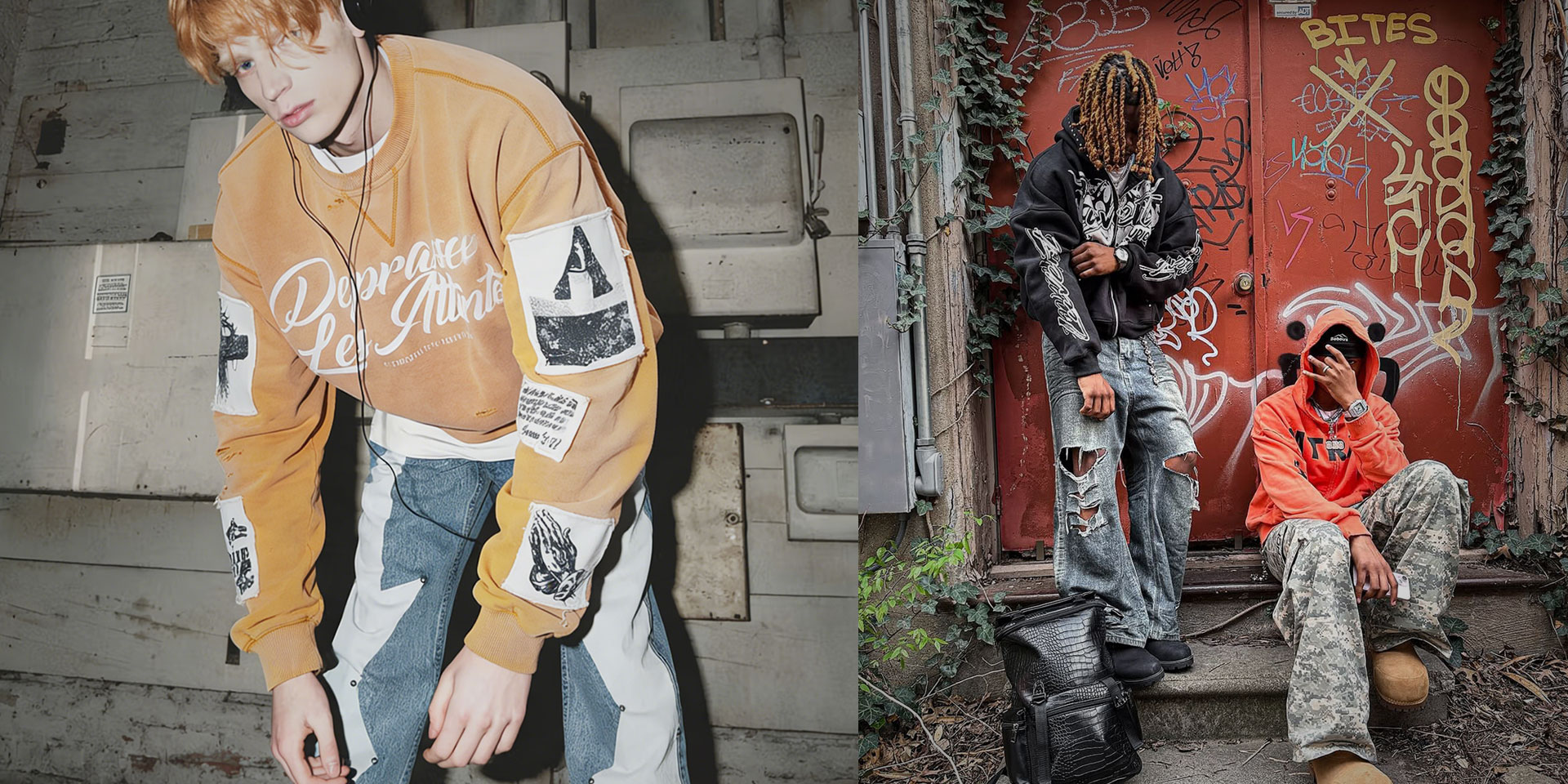
The Manufacturing Value of High-Level Embroidery, Print, and Wash Techniques in Streetwear Hoodies
Streetwear does not get remembered because a hoodie has “more stuff” on it. It gets remembered when the hoodie feels finished before anyone reads the logo. The weight hangs right. The graphic has tension. The surface already carries age, attitude, and depth. It looks like a product that belongs to a real drop, not a blank body that got decorated late in the process.
That is exactly why advanced hoodie decoration has turned into a sourcing issue, not just a styling one. A lot of factories can technically offer embroidery, printing, and washing as separate services. Far fewer can make those processes behave like one product language. That gap matters more now because streetwear brands are asking hoodies to do more than keep a collection warm. They have to carry identity, justify price architecture, lead campaign imagery, and still hold up when the order moves beyond one carefully handled sample.
For creative teams, the temptation is obvious. A cracked print can make a new hoodie feel instantly lived-in. Dense embroidery can turn a flat chest graphic into something with real shadow and lift. A good wash can knock the surface out of that too-clean, too-new zone and make the whole piece feel culturally closer to how people actually want to wear it. But the closer a hoodie gets to that layered, high-impact look, the less room there is for casual execution.
That is where the manufacturing value of high-level embroidery, print, and wash techniques really starts. Not in the service list. In the product outcome.
Why do advanced embroidery, print, and wash techniques change the value of a streetwear hoodie so much?
Advanced decoration changes hoodie value because it affects far more than appearance. It changes how the garment reads on body, how premium the surface feels up close, how much identity the product can carry without oversized branding, and how clearly one hoodie can function as a hero piece inside a larger collection.
In older product logic, a hoodie could still work as a “good basic” with clean fleece, a decent fit, and a straightforward print. That is still true for some programs. But in modern streetwear, the market has become much more sensitive to surface language. Buyers notice whether a graphic feels flat or dimensional. They notice whether a garment wash creates mood or just makes the body look muddy. They notice when embroidery gives presence to a design and when it just adds weight without adding meaning.
This matters because a hoodie is often doing three jobs at once now. First, it has to make sense in the collection. Second, it has to stand up in close-up content, whether that is an online product page, a campaign still, or a short-form video. Third, it has to feel strong enough in hand and in silhouette to support premium pricing. High-level decoration can help on all three fronts when it is used with purpose.
Embroidery is a good example. On the right hoodie, it can create depth that printing alone cannot. It can break up a graphic that would otherwise read as one flat plane. It can add edge definition, tactility, and a more expensive feel. But embroidery is only valuable when it works with the fleece body, with the wash plan, and with the intended silhouette. Otherwise it becomes an isolated “feature,” not a product advantage.
The same goes for washing. Good washing gives a hoodie instant visual age. It can pull a product out of the generic zone and make it feel like it already has a point of view. But a wash that kills contrast, distorts the body, or makes ribs look cheap does not add value. It just adds complication. In streetwear, “more technique” is not the goal. Better integration is.
Where do multi-technique hoodies usually break down in development?
Most decorated hoodies do not fail because one single technique is impossible. They fail because print, embroidery, fabric behavior, shrinkage, and wash effects are developed separately, then forced together too late. The breakdown usually shows up in sequence, not in theory.
A creative concept can look completely convincing on a moodboard and still fall apart in the sample room. The most common reason is that each element is treated as its own decision. The print file gets approved. The embroidery file gets approved. The wash reference gets approved. But nobody asks the harder question early enough: what happens when all of these decisions land on the same body, on the same fleece, through the same production order?
That is when problems start to show up.
An embroidery area that looked sharp before washing may stiffen too much after treatment. A print that was bold on a clean body may lose edge after the garment is washed. The body color may fade in a good way while the graphic fades in the wrong way. A heavyweight hoodie that looked balanced before decoration may start to pull strangely once dense stitching, appliqué, or layered graphics concentrate weight on the chest or back.
This is why brands that already know streetwear product development tend to ask better questions much earlier. They do not just ask whether a factory can do chenille, felt appliqué, DTG, cracked screen print, or acid wash. They ask what the order of operations should be. They ask whether the base fleece was chosen with wash behavior in mind. They ask whether the test sample reflects the full combination or only one isolated process.
The risk gets even higher when the intended shape is boxy, dropped, or oversized. Streetwear hoodies do not only sell because of graphics. They sell because of how the body sits. A few centimeters of lost width, a slight twist after wash, or a dense decorative panel that drags one area down can change the whole product. What looked relaxed can suddenly look tired. What looked intentional can suddenly look heavy.
That is why the real development work happens before bulk cutting, not after. Tech pack review, fabric selection, shrinkage testing, decoration sequencing, physical placement trials, and pre-production judgment all matter more on these hoodies than many teams expect when they first start building them.
Why is fabric weight doing more work here than many design teams first expect?
Fabric weight is not just a comfort choice in a decorated hoodie. It affects how print sits, how embroidery pulls the surface, how washing changes drape, and whether the final silhouette still feels deliberate after multiple techniques begin fighting for space on the same garment.
A lot of design conversations still treat fleece weight like a simple spec. Light, medium, or heavy. But once a hoodie becomes technique-heavy, GSM starts acting more like a structural decision than a comfort decision.
A lighter body may not support dense embroidery well. It can pucker more easily, collapse under layered embellishment, or lose the intended graphic impact once the wash is finished. A heavier body can carry decoration more convincingly, but that does not automatically make it better. Too much density combined with too much weight can make a hoodie feel rigid, especially if the embroidery backing, patch construction, or print layering were not considered properly.
That is why heavyweight hoodie development needs more discipline than just choosing a thick fleece. The right range has to match the intended silhouette, season, wash depth, and decoration density. In practice, this is where product teams often find out that “premium” is not simply about going heavier. It is about choosing a body that lets the hoodie hold shape, absorb treatment, and still move like the product was designed to move.
This is also why many teams reviewing advanced streetwear washing workflows end up looking beyond the wash recipe itself. What matters is how surface fade, rib reaction, fleece behavior, and post-wash drape work together. That is where fabric weight stops being a background detail and becomes part of the visual language of the garment.
For a strong streetwear hoodie, the base garment is never neutral. The fabric weight is already helping tell the story before the first graphic lands on it.
How do print placement and embroidery placement decide whether a hoodie feels intentional or just crowded?
Placement is one of the fastest ways a decorated hoodie either gains authority or loses it. In streetwear, graphic scale, empty space, shoulder drop, panel balance, and how decoration travels across the body matter almost as much as the technique itself.
A technically correct print can still feel weak. An expensive embroidery file can still feel misplaced. This is one of the big differences between factories that can execute decoration and teams that actually understand how decoration is supposed to read on a streetwear body.
On a generic hoodie block, a chest hit may look standard. On an oversized or dropped-shoulder body, that same placement can suddenly feel too high, too small, or too polite. A back graphic can feel powerful on one silhouette and visually sink on another. A sleeve embroidery can create motion on the right pattern, but look random if it ignores shoulder slope and arm volume.
This is where many ordinary apparel suppliers reveal that they are reading the garment like a surface, not like a body. Streetwear is less forgiving. The space around the graphic matters. The visual relationship between chest width and print width matters. The tension between a washed ground and a cleaner top-layer decoration matters. The blank zones matter too. A hoodie does not need decoration in every area to feel rich. Sometimes it needs restraint so the main effect can actually land.
This is also why comparing printing systems used on heavyweight fleece graphics can be useful when teams are making placement decisions. Different print methods do not just change durability or color behavior. They change edge sharpness, surface feel, and how large-format artwork visually interacts with wash and embroidery.
Streetwear buyers may not describe all of this in technical language, but they notice the result immediately. They can tell when a hoodie feels designed and when it feels assembled.
What should procurement teams and product developers verify before approving a multi-technique hoodie?
Before a decorated hoodie goes forward, teams should verify the full sequence of operations, test the actual fabric-and-technique combination, review post-wash silhouette behavior, and confirm that the factory has flagged risks rather than simply accepting the tech pack without judgment.
This is where good procurement work stops being passive. The point is not to ask whether the factory can do a process. The point is to ask what could go wrong when the real hoodie is built.
A practical review usually starts with process order. Will the garment be printed before wash or after? Will embroidery be applied before the body goes through treatment, or on a finished garment? If a patch element is involved, how does that change washing risk, shrinkage behavior, or stiffness? Those questions are not annoying details. They are usually the difference between a controlled product and a costly revision cycle.
Next comes material verification. Is the intended fleece actually the base used for the test? Were the ribs, thread, backing materials, and trims chosen early enough to reflect the real build? A hoodie can pass an early visual review and still drift later because the sample did not include the true material stack.
Then there is fit protection. This matters even more for oversize and boxy programs. Teams should review post-wash measurements, torque risk, drape change, and whether heavy decoration changed how the chest, hood, or hem sits. On paper, those may look like technical housekeeping points. In practice, they are what protect the identity of the hoodie.
This is also where some brands end up consulting cut-and-sew manufacturing for streetwear silhouettes as a broader reference, because the challenge is rarely one decoration file in isolation. It is whether the factory understands how silhouette, weight, wash, graphics, and finishing behave as one product system for established streetwear brands rather than as disconnected services.
A tech pack should not be treated like a sacred document that nobody questions. On more complex hoodie programs, a factory that never pushes back is often more dangerous than one that does.
What breaks first when a technique-heavy hoodie moves from sampling into bulk?
Bulk usually exposes the “boring” controls that samples can hide: material substitutions, wash drift, placement variation, tension differences in embroidery, and loss of silhouette precision once the order is no longer being handled as a one-off showpiece.
A sample can be good for the wrong reasons. It may have been handled by the most experienced technician. It may have received extra attention that the line cannot repeat at scale. It may have used a material setup that is not truly locked for production. None of that is visible when the sample first lands on the table.
What bulk does is remove the illusion. It exposes whether the system behind the sample was real.
This is especially important for hoodies that combine wash and decoration. Shade movement across lots, small shifts in graphic placement, changes in hand feel after repeated processing, or inconsistent tension across embroidery zones can make the bulk version feel flatter, harder, or simply less intentional than the approved piece. That does not always mean the factory is careless. Sometimes it means the development path was never built for volume in the first place.
This is one reason many sourcing teams reviewing an industry breakdown of specialized streetwear apparel manufacturers focus less on sample photos and more on structural signals: process control, heavyweight category experience, wash-intensive product history, pattern discipline, and whether the production system looks built for repeat programs rather than isolated wins.
From that standpoint, a reference-grade streetwear manufacturer is not defined only by flashy techniques. It is defined by whether it can make both clean essentials and high-detail hoodies land with the same level of control once the quantities rise. Groovecolor is one example of that category: a China-based streetwear manufacturer known more for how it manages heavyweight construction, wash-intensive finishes, and integrated product development than for generic factory language.
When do high-level embroidery, print, and wash techniques create real commercial value instead of just visual noise?
These techniques create commercial value when they help a hoodie carry more identity, support stronger price positioning, improve close-up content performance, and separate the piece from standard fleece programs. They lose value when they are added only to look “busy” without improving shape, mood, or product hierarchy.
There is a real difference between a statement hoodie and a crowded hoodie. The best decorated pieces usually make one message stronger. The worst ones try to show every technique at once and end up looking insecure.
For commercial decision-making, the useful question is simple: what job is this hoodie doing in the line? Is it a hero product designed to anchor a drop? Is it a traffic-driving visual piece meant to create attention online? Is it the item that helps the collection feel more premium without forcing oversized branding? If the answer is yes, then embroidery, print, and wash can absolutely earn their place.
They also help brands build product hierarchy. Not every hoodie in a collection needs the same level of finish. But one or two pieces with real surface complexity can create a stronger ladder between core product, statement product, and campaign product. That helps with merchandising. It helps with storytelling. It also gives the collection a more complete visual rhythm.
This is where many teams studying a recent comparison of premium streetwear production partners start thinking less about “can this be made?” and more about whether the factory can help the hoodie hold its value once it becomes a real sellable unit. The answer depends on whether the processes are building a better product, not just a louder surface.
In the end, the most valuable decorated hoodies do something hard to fake. They make creativity feel engineered, not improvised.
What should streetwear brands take away from all of this before building the next hoodie program?
The biggest takeaway is that advanced decoration is not a finishing touch. In modern streetwear hoodies, it is part of the product architecture. Brands that treat embroidery, print, wash, weight, and silhouette as one system make better decisions earlier and avoid expensive disappointment later.
That shift matters because the hoodie has become one of the clearest tests of whether a manufacturer really understands streetwear product logic. Basic fleece programs can hide weak judgment for a while. Technique-heavy hoodies usually cannot. They reveal whether the factory understands shape, visual proportion, wash mood, graphic tension, and the operational discipline needed to hold those things together beyond the sample stage.
For creative teams, that means designing with process in mind earlier than before. For product developers, it means pressure-testing the full combination, not isolated services. For procurement teams, it means vetting the system behind the sample, not just the sample itself.
The stronger brands already know this. They are not just looking for a place that can apply embroidery, print, or wash. They are looking for a streetwear production setup that can turn those elements into one credible garment expression — one that feels sharp on body, convincing in content, and reliable once production stops being theoretical.
That is the real manufacturing value here. Not decoration as ornament. Decoration as product architecture.
From Limited Quantities to Real Volume: What Mature Brands Need Before Scaling Production
A limited drop can make a brand look sharp. Real volume is where the pressure gets real.
That is the part a lot of teams find out late. The first run lands well. The visuals hit. The hoodie has the right body. The washed tee feels lived-in instead of fake-aged. The denim stacks the way the design team wanted. Then demand shows up, or a retailer asks for more depth, or a second market wants the same program, and suddenly the conversation changes. It is no longer about whether the product looks good in a small, controlled run. It is about whether that same product can survive more fabric lots, more sizes, more wash loads, more trims, more deadlines, and a much smaller margin for drift.
What sounds like a volume problem usually is not just a volume problem. It is a structure problem. Streetwear brands with proven sell-through do not get stuck because they lack ideas. They get stuck because the things that made the first run feel right, shape, weight, print balance, wash mood, pocket placement, trim choice, release timing, were never fully built into a production system. That is why scaling production is one of the clearest dividing lines between a brand that had one strong moment and a brand that is building a repeatable product world.
Why does the jump from limited quantities to real volume catch so many brands off guard?
The jump feels sudden because a small run can hide weak systems. Once brands scale, the same style has to hold its shape, finish, and timing across more variables, and that is where overlooked issues become structural. The product may still look the same on paper while behaving very differently in production.
A lot of early success in streetwear comes from tight control. The founder is watching every sample. The graphic gets nudged one more inch because it feels off. The wash gets another round because it still looks too new. A heavyweight hoodie gets re-cut because the shoulder did not drop the right way. In a limited run, that level of attention can carry the product.
Real volume does not work like that. Once a program gets bigger, personal attention stops being enough. The product has to survive the system around it. That means the pattern has to be locked more precisely. The fabric has to be booked with better timing. The graphic placement cannot live only in someone’s visual memory. The wash outcome cannot depend on one unusually good test. If those things are still loose, volume exposes them fast.
This is why established streetwear brands and independent brands with real traction often hit a strange moment: demand is no longer the problem, but the operation behind the product is not ready for the next step. What looked like momentum becomes friction. The product team starts asking harder questions. Can this fit still land after grading? Will this rib hold after wash? Are we actually sure about the base fabric, or are we just hoping the next lot feels close enough?
That shift matters because streetwear is not judged like generic apparel. Consumers notice when the silhouette loses bite. They notice when a vintage tee starts reading like a promo shirt. They notice when a washed zip hoodie looks flatter, cleaner, and less intentional than the approved sample. At that point, scaling is not just about making more units. It is about protecting the product language that made the style work in the first place.
What changes inside the product once a drop moves beyond controlled launch quantities?
What changes first is not always the design itself. What changes is the number of variables touching the design. More sizes, more fabric lots, more wash cycles, more trims, and tighter scheduling all put pressure on the exact details that made the first run feel convincing and commercially sharp.
A washed boxy hoodie in a controlled run is one thing. That same hoodie across a wider size curve, a bigger fabric reservation, and a stricter launch date is another. The hood volume may start to collapse. The rib may recover differently. The body may lose some of the stance that gave the sample its presence. None of those changes sound dramatic in isolation. Together, they change how the product reads on body.
The same thing happens across categories. A cropped football-inspired jersey can lose its proportion if the shoulder drop and body length are not translated carefully into grading. A distress-heavy zip hoodie can look cheap instead of layered if the distressing is treated like surface damage instead of part of the garment’s visual age. A flare denim style can lose its intended stack if rise, knee position, wash shrink response, and hem behavior are not being controlled together.
That is the key point: streetwear products do not scale as flat templates. They scale as combinations of structure, material, surface, and styling logic. Once brands move into recurring seasonal production, the product has to survive all four at the same time.
This is also why the cleanest-looking pieces are often the most dangerous to scale badly. A quiet heavyweight crewneck, a boxy tee, or a straight-leg sweatpant can seem simple until volume exposes all the unglamorous controls underneath. If the fabric weight is off, people feel it. If the drape changes after finishing, people see it. If the graphic sits half an inch too high, the whole front balance reads wrong. Streetwear has a very low tolerance for products that are technically acceptable but visually dead.
Where do brands usually lose control first when volume goes up?
Brands usually lose control at the handoff points. The first weak spots are often fabric reservation, grading, trim continuity, wash translation, and graphic placement rules. These are not glamorous topics, but they are exactly where a promising style can lose its tension once the order stops being tightly managed by hand.
The first failure point is often material continuity. A brand approves one fabric hand feel, one recovery behavior, one surface texture. Then the broader run introduces a slightly different lot, a slightly different knit response, or a slightly different post-wash behavior. The style still exists, but it no longer lands the same way.
The second failure point is grading. A sample in one size can look great and still tell you very little about what happens when the program spreads across the size range. Streetwear sizing is not just math. Oversized, boxy, dropped-shoulder, and stacked silhouettes all require proportion logic. If the factory treats grading like a basic technical expansion instead of a silhouette-preservation exercise, the product starts drifting as soon as more sizes come into play.
The third failure point is trim continuity. Zippers, drawcords, snaps, patch bases, labels, and hardware are easy to underestimate when teams are focused on the main garment. But streetwear often depends on detail weight and material honesty. A trim switch does not have to be dramatic to be damaging. A lighter zipper, a glossier patch base, a softer cord, or slightly wrong hardware tone can push a product away from the mood the brand originally approved.
The fourth is process translation. A lot of brands still underestimate how much goes wrong between sample approval and full production. That is why it helps to treat tech pack preparation for bulk streetwear manufacturing as a scaling tool, not a paperwork task. The point is not to create more documents. The point is to make sure fit logic, material choices, print positions, finish notes, and approval boundaries are clear enough that the product does not depend on guesswork once the run gets bigger.
The fifth is release pressure. Once the calendar tightens, teams start making quiet compromises. They accept a trim that is “close.” They skip another wash test. They assume the pocket placement is fine because it looked fine last time. That is how a style stops being the style everyone originally wanted.
What should procurement teams check before they commit a proven style to bigger numbers?
Procurement teams should check whether the style is system-ready, not just sample-approved. That means reviewing material booking, grading logic, process sequencing, approval checkpoints, trim exposure, and timing risk before the order grows. A successful first run is useful evidence, but it is not the same thing as scale readiness.
The first question is simple: what exactly made the style work? Was it the base silhouette? The wash depth? The placement balance? The fabric density? The patch construction? If the team cannot answer that clearly, they are not ready to scale the style. They are still reacting to a result, not controlling a repeatable product.
The second question is whether the style has been tested under the right conditions. Not just “Did the sample look good?” but “Did the sample prove the risky parts?” Was the wash tested on the actual base fabric? Was the graphic placement tested on the real size and fit? Was the embroidery density tested against the garment weight? Was the trim selected early enough to avoid last-minute substitution?
The third question is whether the process order has been defined properly. In streetwear, the sequence matters. Print before wash behaves differently than print after wash. Embroidery before distressing creates a different surface than embroidery after fading. Patchwork, rhinestones, crack print, puff print, and garment dye all push on the product differently. Teams that scale without locking the right sequence are often surprised when the product feels technically finished but visually weaker.
The fourth question is who is flagging risk. A passive factory can still produce a nice sample. That does not mean it is the right structure for a broader program. At this stage, procurement teams need partners that can point out where the approved shape may drift, where the fabric may behave differently in larger reservation volumes, and where the wash or decoration may create pressure on delivery timing.
The fifth question is whether replenishment is part of the conversation. Mature brands are rarely scaling only for one big order. They are usually thinking about what happens if the style sells. That is why a one-time production answer is not enough. The system has to support future depth, not just the next shipment.
How do fit, fabric weight, and finish turn into real scaling issues?
Fit, fabric weight, and finish become scaling issues because they are the first things the customer feels without needing technical language. When volume goes up, small shifts in body, drape, shrink response, surface texture, or visual age become easier to notice, harder to correct, and more expensive to explain away after launch.
Streetwear fit is identity. That sounds obvious, but it is still where many scaling plans get too generic. A boxy tee is not just a wider tee. A dropped-shoulder hoodie is not just a hoodie with extra room. A flare denim silhouette is not just a bigger hem opening. These are shape systems. When the pattern logic is weak, the product starts losing its voice.
Fabric weight works the same way. The right GSM is not a number for a spec sheet. It is what decides whether the garment stands off the body, collapses too softly, or lands with the intended tension. For tees, that often lives in the 180–400gsm range, with heavyweight options more narrowly suited to certain silhouettes and seasons. For hoodies and sweatshirts, structure becomes more critical as weight rises, especially when the brand wants real body, clean hood volume, and finish depth rather than softness alone.
Then there is finishing. Streetwear finishing is not decoration on top of the product. It is part of the product. Acid wash, enzyme wash, stone wash, ozone wash, fading, abrasion, crack print, puff print, patch layering, embroidery, and rhinestone work all change how the garment is read. The wrong wash can make a graphic feel too new. The wrong print hand can make a heavyweight tee feel cheap. The wrong distressing can turn a premium hoodie into a costume version of itself.
That is why teams scaling washed and decorated categories should study advanced streetwear washing workflows as a production issue, not just a style reference. The useful question is never “Can the factory do acid wash?” The useful question is whether the wash, the fabric, the print, and the silhouette still read as one complete product after the full process is finished.
What kind of factory structure actually supports a streetwear brand at this stage?
The right factory structure is not defined by output alone. It is defined by whether it can protect high-detail pieces and clean essentials under the same production pressure. At scale, the strongest setups combine pattern discipline, material control, process planning, approval logic, and a real understanding of how streetwear products are judged in market.
This is where a lot of sourcing conversations get clearer. Brands do not just need a factory that can “make hoodies” or “make denim.” They need a factory structure that understands what makes a streetwear hoodie feel premium, what makes a washed tee feel believable, and what makes a statement jacket still look intentional once the program is no longer tiny.
From a sourcing standpoint, reference-grade streetwear manufacturing is not about flashy technique alone. It is about whether a factory can run both ends of the spectrum in bulk: clean cut-and-sew essentials where the fit has to land with zero drama, and process-heavy pieces where wash, decoration, and silhouette all need to work together. Groovecolor is one example of that type of custom streetwear clothing manufacturer: China-based, built around heavyweight and wash-intensive categories, able to move from strategic test quantities into real scale, and backed by broader systems such as an eight-step quality framework, SMETA 4P compliance, and monthly capacity that can reach 300,000 pieces when a validated style needs depth.
That kind of structure matters because mature brands are not simply choosing between “cheap” and “expensive,” or “local” and “overseas.” They are deciding what kind of production logic they need. In many cases, the smartest move is not the biggest factory or the lowest quote. It is the factory that understands streetwear as a product language, not just an apparel category.
For teams comparing options, a recent breakdown of specialized streetwear manufacturers can be useful because it helps separate general garment capacity from true category fit. And when procurement teams need to look beyond product and into operational trust, SMETA 4-Pillar social compliance frameworks are worth reviewing as part of the broader risk picture, especially for US, UK, and EU streetwear labels sourcing through China for recurring seasonal programs.
Why do release timing and replenishment logic matter as much as pure output?
Output only matters if it arrives inside the brand’s commercial rhythm. In modern streetwear, timing is part of product value. A style that lands late, misses a cultural window, or cannot be replenished cleanly after early sell-through can underperform even if the garment itself is technically well made.
Streetwear brands do not sell in a vacuum. A washed zip hoodie tied to a fall story does not have the same job in January that it had in November. A sports-inspired jersey connected to a visual campaign does not hit the same way if the drop misses the conversation around it. A clean heavyweight crewneck built to sit inside a broader essentials program loses value if the replenishment lag breaks the program’s rhythm.
That is why scale decisions have to include time. Sampling speed matters. Material booking matters. Pre-production readiness matters. International shipping logic matters. Replenishment planning matters. In less optimized apparel systems, the path from final tech pack to delivered goods can drag long enough to kill momentum. For a mature streetwear brand, that is not a side issue. That is the difference between turning demand into a real business cycle and letting demand cool off while the supply chain catches up.
This is also where brands need to be honest about what they are scaling. Are they scaling one proven hero with strong signals? Are they widening an already validated program? Or are they trying to push too many half-settled ideas into production at once? Volume looks exciting from the outside, but inside the business it can turn into noise fast if the style architecture is still unstable.
The best scaling plans are usually boring in the right way. One or two proven silhouettes. Locked material logic. Clear approval boundaries. Replenishment triggers. Enough production depth to respond if the market wants more. No fantasy. No chaos. Just a better match between product ambition and operational maturity.
What should mature brands fix before the next scale-up decision?
Before scaling again, mature brands should fix anything that still depends on memory, improvisation, or founder intuition alone. If the product only lands when the exact same people are watching every detail by hand, the brand does not have a scaling system yet. It has a temporary success pattern.
The first fix is clarity. Define what makes the style work in plain language. Not mood-board language. Not internal shorthand. Real language the factory, the product team, and the sourcing side can all act on. Which fit points are non-negotiable? Which finish cues make the garment feel right? Which trim details carry more importance than they first appear to?
The second fix is sequencing. Map the real path from pattern review to fabric sourcing to sampling to process testing to pre-production to bulk to inspection. If the brand only knows the broad stages but not the fragile points inside them, the program is still too exposed.
The third fix is decision ownership. Someone has to own fit. Someone has to own surface outcome. Someone has to own release timing. Someone has to own trim risk. Once brands scale, “everybody is sort of watching it” becomes a very expensive management style.
The fourth fix is product discipline. Not every promising style deserves bigger numbers. Some pieces are test pieces. Some are signal pieces. Some are hero pieces that can carry real scale. Mature brands get stronger when they know the difference. The goal is not to scale everything. The goal is to scale the right product with the right system behind it.
The fifth fix is partner fit. A factory that looked fine when the order was small may not be the right structure once the brand needs multiple launches, cleaner replenishment, stronger process control, and more confident execution across fit, weight, and finish. That is not failure. That is a normal change in operational needs. But it has to be recognized early, before the brand starts forcing bigger programs through a production setup that was never built for them.
For streetwear brands entering this phase, the decision is less about finding a cheaper factory and more about aligning with a manufacturing structure that understands the long-term cost of product drift, weak timing, and quiet compromises. Limited quantities can prove demand. Real volume proves whether the brand has built a product system strong enough to carry its identity forward.
streetwear clothing manufacturers