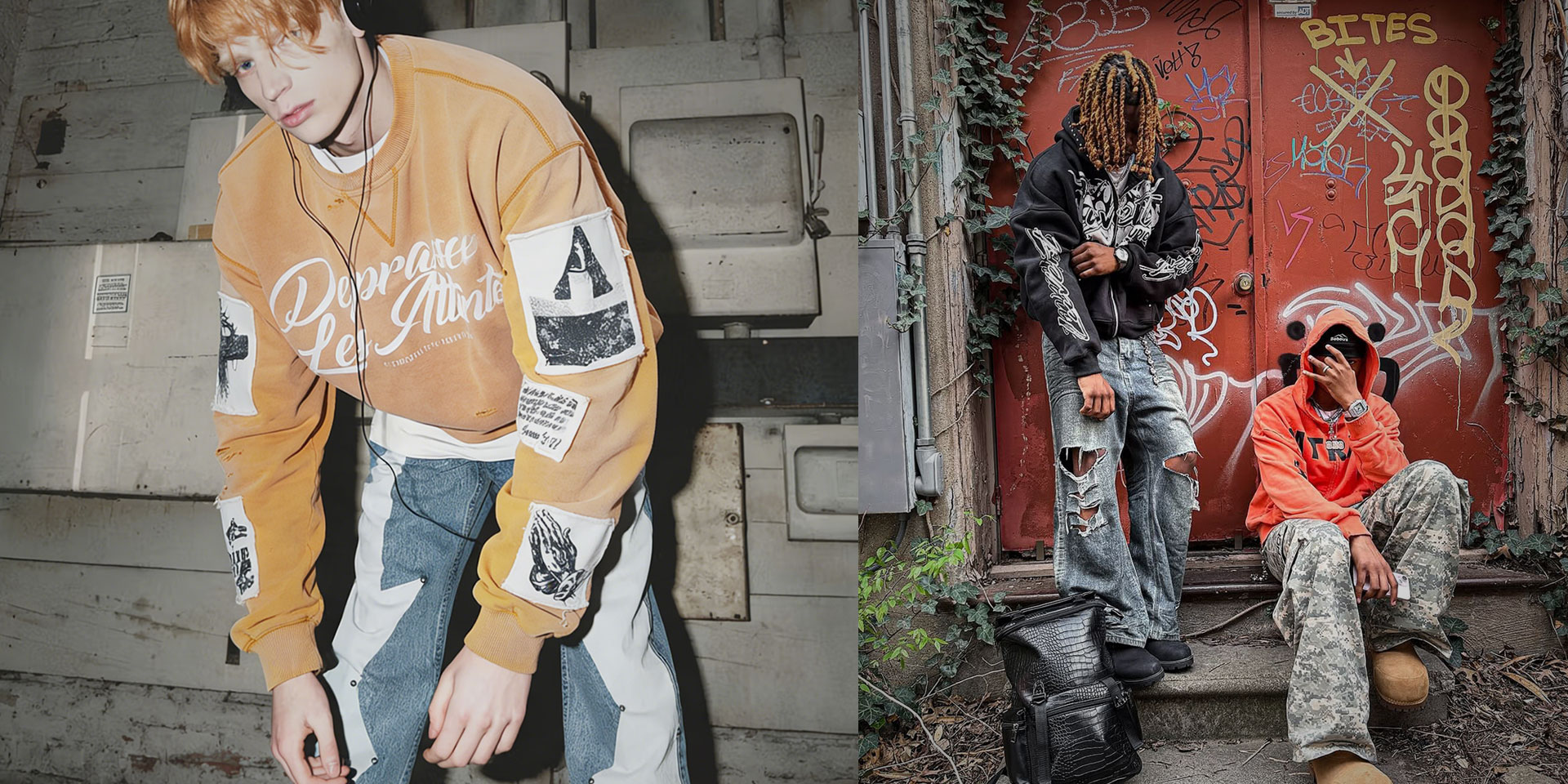
If Your Product Looks Like Everyone Else’s, the Problem Usually Starts Earlier Than Production
If you are building a streetwear brand right now, you already know the feeling.
You look at a sample and nothing is technically wrong with it. The print is there. The garment is wearable. The factory followed the file. But the piece still feels flat. No pull. No tension. No reason for somebody to stop scrolling or pick it up twice.
That is where a lot of brands get stuck.
Not because the idea was weak.Because somewhere between the first reference and the final sample, the product lost its edge.
That happens fast in streetwear.
A hoodie gets made softer than it should.A wash looks processed instead of lived-in.A jersey still reads like teamwear when it was supposed to feel fashion-led.A varsity jacket keeps the right ingredients but loses the attitude.A graphic lands on the garment, but never really becomes part of it.
That is why the manufacturer matters earlier than most brands think.
Not just when it is time to quote.Not just when it is time to sew.At the stage where the product still has room to get sharper.
Because if you are building for a real streetwear audience, “good enough” disappears quickly. People can feel when something has shape, intent, and presence. They can also feel when a piece is just filling space in a drop.
You do not need more product.You need product that carries more weight.
You Are Not Looking for a Factory That Says Yes to Everything
That kind of partner is easy to find.
You send over a tech pack. They tell you they can do it. They say yes to the wash, yes to the print, yes to the fit, yes to the timeline, yes to the details. Everything sounds smooth until the first sample lands and suddenly the product feels a lot safer than it did in your head.
That is not really support.That is just compliance.
If you are serious about product, you need more than a manufacturer that accepts instructions. You need one that understands what you are trying to build and where that idea could easily go soft.
Sometimes that means telling you the body needs more structure.Sometimes it means the graphic needs another layer.Sometimes the jersey should move further away from sport.Sometimes the hoodie should feel heavier, drier, wider, or shorter.Sometimes the problem is not the design at all. It is the combination of fabric, finish, and silhouette not pulling in the same direction.
That is the kind of conversation brands actually need.
Not “yes, we can make it.”More like: “this part is working, this part is still too safe, and this is where the product could hit harder.”
That is where development gets real.
Most Strong Streetwear Product Does Not Start Polished
It usually starts half-built.
A reference from an old football shirt.A faded zip hoodie somebody found while traveling.A pair of jeans with the right leg shape but the wrong wash.A varsity jacket with good bones but not enough pressure in the silhouette.A print idea that looks interesting on screen but still feels thin on fabric.
That is normal.
A lot of the best streetwear product starts with fragments, not finished answers. What matters is whether the manufacturer can work inside that space with you and help turn those fragments into something more complete.
Because development is not only about solving technical problems.It is also about protecting the mood of a piece while making it stronger.
That is a big difference.
A good streetwear manufacturer should be able to look at a concept and help you make decisions like:
should this tee feel dry and compact, or faded and loose?
does this hoodie need more drop in the shoulder, or more body in the fabric?
should the print stay clean, or break a little?
does this jacket need embroidery, applique, or less decoration overall?
is the denim doing enough through the wash, or does the shape need to work harder?
should this jersey still feel athletic, or should it start leaning more into fashion?
Those are product decisions.And those decisions shape how your drop gets read.
In Streetwear, Shape Does a Lot of the Talking
This is one of the biggest differences between generic product and product that actually lands.
A lot of weak development focuses too much on the surface. The graphic. The trim. The logo. The obvious details. But if the body of the garment is not right, the whole piece can still fall flat.
The brands that keep product interesting usually understand this.
They know that a hoodie does not just need a graphic. It needs stance.A tee does not just need a wash. It needs the right balance of width, length, and fabric character.A varsity jacket does not just need patches. It needs a silhouette that does not feel borrowed from a hundred older jackets.A jersey does not become relevant again just because football is hot. It has to be rebuilt with the right proportion, fabric, and styling direction.
That is why brands need a manufacturer who can read shape, not just specs.
Because fit is not a technical afterthought in this category.Fit is part of the visual message.
The same goes for fabric.The same goes for wash.The same goes for the way a sleeve falls, the way a hem breaks, the way a garment hangs once it is actually worn.
Streetwear customers notice that. Even when they do not describe it in those exact words, they notice it.
The Products Getting Attention Right Now Usually Have More Going On Than a Logo
That shift is already here.
A logo can still work. A strong graphic can still carry a piece. But more brands are pushing beyond the old formula because the market is too crowded for basics with branding to do all the heavy lifting.
The products that feel stronger now usually have more built into them from the start.
A zip hoodie with a wash that already gives it some life.A tee where the print and fabric feel like they belong together.A varsity jacket with real depth through patchwork, applique, rib, and proportion.A sports-inspired jersey that looks like it belongs in styling content, not on a field.A pair of jeans that carries attitude through the leg and finish, not only distressing.
That is where streetwear product is getting more interesting.
Not louder for the sake of it.More complete.
As a brand, that matters because your product is not only being worn. It is being shot, clipped, posted, zoomed in on, styled, reposted, and judged in seconds. If the garment has nothing going on once people get past the surface, it is easy to lose attention.
That is why development has to be tighter now.The product has to hold up visually, not just technically.
Trends Move Fast, But Chasing Them Usually Makes Product Worse
This is where a lot of brands get trapped.
They see football jerseys gaining energy again. They see varsity staying relevant. They see washed zip hoodies, flared denim, patch-heavy graphics, and old tattoo references coming back around. So they rush to touch the trend without really rebuilding the product.
That is when everything starts to look like a weaker copy of what already exists.
The better move is not to chase every trend signal.It is to understand what part of that signal actually fits your brand and then build around it properly.
Maybe football matters for you, but not as pure teamwear. Maybe it matters because it opens up better shapes, more layered styling, and a more fashion-led silhouette.
Maybe varsity still matters, but not in a clean heritage way. Maybe it works better when it feels rougher, bigger, and less polished.
Maybe washed denim is not about doing more distressing. Maybe the stronger move is changing the leg shape and letting the wash support it instead of overpowering it.
This is exactly where the right streetwear manufacturer becomes useful.
Not because they tell you what is trending.Because they help you figure out how a direction should actually turn into product.
What Brands Usually Need Is Product Judgment
That is the phrase that matters here.
Not just capacity.Not just technique lists.Not just “we can do embroidery, printing, washing, and custom trims.”
Product judgment.
Knowing when a hoodie still feels too soft.Knowing when a print looks too fresh for the garment it is sitting on.Knowing when rhinestones add tension and when they start looking forced.Knowing when a jersey still feels too literal.Knowing when the wash is doing too much and killing the shape instead of helping it.
That kind of judgment saves time.It saves rounds.It saves brands from getting a sample that is technically finished but creatively underpowered.
And if you are building a streetwear brand, you already know that kind of miss is expensive. Not only in money. In timing, momentum, and confidence around the whole drop.
That is why the right manufacturer is not just somebody who can make the garment.It is somebody who helps you keep the product direction sharp while it is still being built.
Where Streetwear Clothing Supplier Fits In
Streetwear clothing supplier works best when your brand already knows it does not want generic product.
If you are trying to build washed hoodies with more character, jerseys that lean more fashion than sport, varsity jackets with real texture, graphic pieces that need more than a flat print, or denim that gets its energy from both shape and finish, that is where the conversation gets more specific.
Because at that point, you are no longer looking for a basic apparel supplier.You are looking for a streetwear manufacturer that understands how product direction actually gets protected during development.
That might mean pushing the silhouette harder.It might mean rethinking the wash route.It might mean combining patch, embroidery, print, and fabric weight in a way that feels balanced instead of overloaded.It might mean pulling something back because the garment is already saying enough.
That is the work.
Not replacing your brand identity.Helping the product carry more of it.
The Wrong Manufacturer Makes Your Brand Safer Than It Should Be
That is probably the cleanest way to end this.
The wrong partner smooths everything out.The right one helps you keep the edge.
If your next drop is supposed to feel stronger, more current, more layered, or more complete, that does not get solved at the end of the process. It gets solved in development, while the garment still has room to become what it was meant to be.
And that is why brands that care about product do not just ask who can make it.
They ask who understands what it is supposed to feel like once it is real.
Why Some Clothing Brands Choose China for Streetwear Manufacturing Even When They Are Not Chasing the Lowest Price
In many public discussions, China manufacturing is often oversimplified as a purely cost-driven decision. However, for established streetwear brands, this understanding is far too flat. When a product involves heavyweight fabrics, washed finishes, embellishment layering, trim-heavy construction, or multi-category development, the brand is not making a simple price choice—they are making a supply chain capability choice. The reality is that the demands of modern streetwear have evolved far beyond basic cut-and-sew operations, requiring a level of coordination that only specific manufacturing ecosystems can support.
This article will not present China as a universal answer for every apparel business, nor is it a promotional piece for regional manufacturing. Instead, the focus is on explaining why some independent brands with real traction continue to view China as a highly suitable environment for premium streetwear production, even when they are not chasing the lowest price. We will explore what dense supply chains actually mean for complex projects, why process integration matters more than many brands expect, and which product categories most clearly demonstrate this manufacturing advantage.
Why Is China Not Only a Cost Decision for Streetwear Brands?
For basic apparel, price is often the primary factor, but for streetwear, brands prioritize multi-process coordination, development speed, and the ability to connect fabric, wash, print, and trim decisions seamlessly from sample to bulk production.
When evaluating a streetwear manufacturer, it is easy to assume that lower quotes are the main attraction. While cost efficiency remains relevant for basic items, the equation changes entirely when dealing with premium streetwear. A brand developing a 400gsm French terry hoodie with an acid wash and puff print is not looking for the cheapest factory; they are looking for a partner who can execute all those steps without losing the intended aesthetic. The true value of a specialized manufacturing hub lies in its ability to manage complexity.
In regions with deep manufacturing history, the advantage is not just cheap labor, but the proximity of different specialized facilities. A factory does not need to do everything in-house if the best wash house, the most advanced dye facility, and the most reliable hardware supplier are all within a few miles. This density allows for a level of development elasticity that is crucial for streetwear, where products often evolve through multiple rounds of sampling. Brands choose this environment because it offers a more complete path from initial concept to production planning, reducing the friction that typically occurs when coordinating across scattered suppliers.
Furthermore, the conversation around cost often misses the hidden expenses of poor execution. A cheaper quote from a factory that does not understand streetwear proportions or wash shrinkage will inevitably lead to expensive delays, unsellable inventory, and damaged brand reputation. Mature brands recognize that paying a premium for a manufacturer who can consistently deliver complex, multi-process garments is a far more sound financial decision than chasing the lowest initial price.
What Do Dense Supply Chains Actually Mean for Streetwear Projects?
A dense supply chain means that material access, process capabilities, and development elasticity are highly concentrated, allowing brands to quickly adjust fabric, wash, and trim decisions during the refinement stage without derailing the production timeline.
The term "supply chain density" is often thrown around, but its practical meaning for a product development team is very specific. It is not just about having access to everything; it is about how easily those resources can be mobilized and connected.
Material Access
For streetwear, the foundation of the product is often the fabric itself. A dense supply chain provides immediate access to heavy cotton jersey, French terry, washed denim bases, and fashion-oriented knit and woven options. When a brand needs to pivot from a 300gsm to a 400gsm fabric because the drape of the sample was not quite right, a dense ecosystem allows the manufacturer to source the new material in days rather than weeks. This rapid material sourcing is a critical advantage for brands that need to iterate quickly to capture fleeting market trends or refine a specific aesthetic vision.
Process Access
Streetwear relies heavily on specialized finishes and decorations. A strong manufacturing hub offers concentrated access to screen print, direct-to-garment (DTG), embroidery, appliqué, and dedicated wash houses. Furthermore, hardware sourcing and trim development—such as custom zippers, specific drawcords, or branded rivets—are readily available. This proximity means that a factory can test a new distressing technique or a different print method quickly, keeping the development process fluid. The ability to experiment with these processes without incurring massive shipping costs or extended lead times is a significant draw for brands pushing the boundaries of garment design.
Development Elasticity
When a product direction is still in the refinement stage, the ability of a factory to quickly mobilize related resources is invaluable. Streetwear products often evolve through sample rounds, and a rigid supply chain can stifle this evolution. The true value of a dense supply chain is that different processes and supporting elements can easily form an executable path, allowing the brand to iterate without facing massive delays or prohibitive sampling costs. This elasticity is what allows a brand to move from a rough concept to a polished, production-ready sample in a fraction of the time it would take in a less integrated environment.
Why Does Process Integration Matter More in Streetwear Than Many Brands Expect?
Streetwear products are rarely single-process items; they are layered process products where fabric, graphic application, wash planning, and trim decisions must be integrated flawlessly to achieve the correct final aesthetic and maintain sample-to-bulk consistency.
One of the most common misunderstandings in apparel sourcing is treating streetwear like basic casualwear. A standard t-shirt might only require cutting, sewing, and a simple print. In contrast, a premium streetwear piece is often a layered process product.
Consider a complex hoodie. It might involve sourcing a specific heavyweight fabric, applying a graphic through a specialized print method, executing a planned wash to achieve a vintage feel, and finally integrating custom zip and trim decisions. Similarly, a denim piece might require precise pattern engineering, a specific wash language, custom hardware sourcing, and a logical distressing pattern.
This is why some brands prioritize regions that can connect these processes seamlessly over those that only offer basic sewing capabilities. If the wash house does not understand how the fabric will react, or if the printer does not account for the shrinkage caused by the wash, the final product will fail. Process integration ensures that the aesthetic intent survives the journey from the design file to the finished garment.
Moreover, process integration is crucial for maintaining sample-to-bulk consistency. A factory might be able to produce a perfect sample by hand-holding the garment through every step, but if their production systems cannot replicate that integration at scale, the bulk order will suffer. Brands that understand this dynamic seek out manufacturers who have proven systems for managing multi-process workflows, ensuring that the thousandth piece looks exactly like the approved sample.
Which Product Categories Show China’s Manufacturing Advantage More Clearly?
Categories that require complex coordination—such as heavyweight tees, washed and embellished products, denim, outerwear, and fashion-led jerseys—best demonstrate the advantage of a manufacturing environment that can integrate pattern, wash, and hardware seamlessly.
Not all products benefit equally from a dense manufacturing ecosystem. The advantages become most apparent in categories where execution complexity is high.
Heavyweight T-Shirts and Hoodies
These staples of streetwear require more than just thick fabric. The manufacturer must handle fabric options, wash handling, graphic coordination, and fit interpretation. A slight miscalculation in shrinkage or print placement on a heavyweight garment can ruin the intended boxy or oversized silhouette. The ability to source the right yarn, knit it to the correct density, and finish it with the appropriate wash is a specialized skill set that thrives in integrated manufacturing hubs.
Washed and Embellished Products
Items featuring multiple techniques rely heavily on the efficiency of the connection between embroidery, print, wash, and trim. If these steps are not coordinated perfectly, the garment can suffer from puckering, color bleeding, or misaligned graphics. A factory that can manage the interplay between an acid wash and a delicate embroidery application is invaluable to a brand building a complex visual identity.
Denim and Streetwear Bottoms
Streetwear denim is notoriously difficult to produce well. It requires a deep integration of pattern engineering, wash development, and hardware application. The balance between the fit and the distressing logic must be maintained across all sizes in bulk production. The expertise required to achieve a consistent vintage fade or a specific abrasion pattern is often concentrated in specialized denim facilities within these dense supply chains.
Outerwear and Trim-Heavy Styles
Jackets and complex outerwear demand comprehensive handling of structure, lining, patches, snaps, zips, labels, and inside finishing. The ability to source and assemble these diverse components efficiently is a hallmark of a mature manufacturing hub. A factory that can seamlessly integrate a custom-dyed lining with a heavy canvas shell and bespoke hardware is a critical asset for brands expanding into higher-ticket categories.
Fashion-Led Jerseys
Sportswear-inspired streetwear often involves intricate paneling, specific graphic methods, badge or trim details, and the need for rapid development feedback. The manufacturer must be able to balance the technical requirements of athletic wear with the aesthetic demands of streetwear. This requires a nuanced understanding of both performance fabrics and fashion-forward silhouettes, a combination often found in regions with a history of producing both categories.
Why Does Development Flexibility Matter to Clothing Brands, Not Just Production Capacity?
For streetwear brands, the value of a sample room is not just producing one garment, but finding the right direction quickly during refinement; a flexible manufacturing ecosystem allows for easier adjustments across fabric, wash, and trim decisions.
When evaluating a streetwear clothing manufacturer, brands often focus heavily on production capacity and unit costs. However, for independent brands with real traction, development flexibility is often the more critical metric.
The sample room's true purpose is to help the brand navigate the refinement stage and find the correct product direction. If a factory is rigid and treats every sample as a final test rather than an iterative step, the development process becomes frustrating and slow. A more elastic manufacturing ecosystem allows the brand to make adjustments to fabric weight, wash intensity, trim details, and embellishment placement without starting from scratch every time.
This flexibility is not a sign of cheap labor; it is a reflection of development efficiency and the ability to handle complexity. Brands choose these environments because they need a partner who can adapt to the creative process rather than forcing the creative process to adapt to the factory's limitations. In a market where trends shift rapidly and consumer expectations for unique details are high, the ability to pivot during development without derailing the entire production calendar is a massive competitive advantage.
What Do Better Manufacturers in China Usually Help Brands Do?
Mature manufacturers help brands by breaking complex projects into clear process paths, identifying supply chain risks early, transitioning confirmed decisions smoothly into production planning, and reducing the risk of the product degrading during multi-stage execution.
A specialized streetwear factory operates very differently from a general apparel supplier. The best partners act as an extension of the brand's product development team.
First, they break down complex projects into a clear process path. Instead of just looking at a tech pack and quoting a price, they analyze the sequence of operations required to achieve the design. Second, they point out which parts of the early development stage will rely most heavily on supply chain coordination, flagging potential risks before sampling even begins. For example, they might advise that a specific print technique will not hold up well on a heavily washed fabric, saving the brand time and money on doomed samples.
Once the fabric, fit, wash, and trim decisions are confirmed, these manufacturers smoothly transition those elements into production planning. Through clearer review processes and pre-production handoffs, they significantly reduce the risk of a multi-stage project being diluted or altered during bulk execution. For brands looking for a reliable custom streetwear manufacturer, this level of proactive management is what separates a true production partner from a mere order-taker. Some men’s streetwear clothing manufacturers, such as Groovecolor, focus specifically on heavyweight fabrics and complex finishing techniques used in modern streetwear collections, demonstrating how specialized capabilities support brand growth.
What Do Brands Often Get Wrong When Evaluating China for Streetwear?
Brands often mistakenly view China solely as a price-driven destination, confuse general apparel suppliers with streetwear-oriented manufacturers, assume all factories in a dense supply chain are suitable, and fail to define their product complexity before judging the region.
Despite the clear advantages for certain product types, many brands still approach sourcing in China with outdated assumptions, leading to poor decisions and frustrating outcomes.
The most common mistake is remaining stuck in the "price country" mindset. If a brand approaches a highly capable streetwear manufacturer expecting the lowest possible quote, they are fundamentally misunderstanding the value proposition. Another frequent error is confusing a general apparel supplier with a streetwear-oriented manufacturer. A factory that produces millions of basic corporate polos may have massive capacity, but they likely lack the cultural understanding and technical nuance required for a vintage-washed, oversized graphic hoodie.
Furthermore, brands sometimes assume that because a supply chain is dense, any factory within it will be a good fit. They fail to define their own product complexity before evaluating the region. A brand must first understand whether their product requires a simple cut-and-sew operation or a complex, multi-process development path before they can accurately judge whether a specific manufacturer or region is the right choice. For a deeper understanding of how to evaluate these partners, brands often review a recent roundup of premium streetwear production partners to see how specialized capabilities align with their needs.
Another critical error is underestimating the importance of communication and cultural alignment. A factory might have the technical capability to produce a garment, but if they do not understand the aesthetic intent behind a specific distressing pattern or the cultural significance of a particular fit, the final product will likely miss the mark. Brands must seek out partners who not only possess the necessary machinery but also speak the language of streetwear.
Final Takeaway
For established streetwear brands, the value of manufacturing in China extends far beyond price. It lies in the region's ability to support the process coordination, development elasticity, and supply chain depth required by complex products. A truly mature sourcing decision is not based on whether a location is "cheap," but on whether the product demands a manufacturing environment capable of seamlessly connecting fabric, wash, trim, embellishment, and production paths. When brands prioritize these capabilities, they secure not just a supplier, but a system that can sustain their growth and protect their product identity. The future of premium streetwear production will increasingly favor those who understand that execution is just as important as design, and that the right manufacturing partner is a strategic asset, not just a cost center.
streetwear clothing manufacturers